Original works
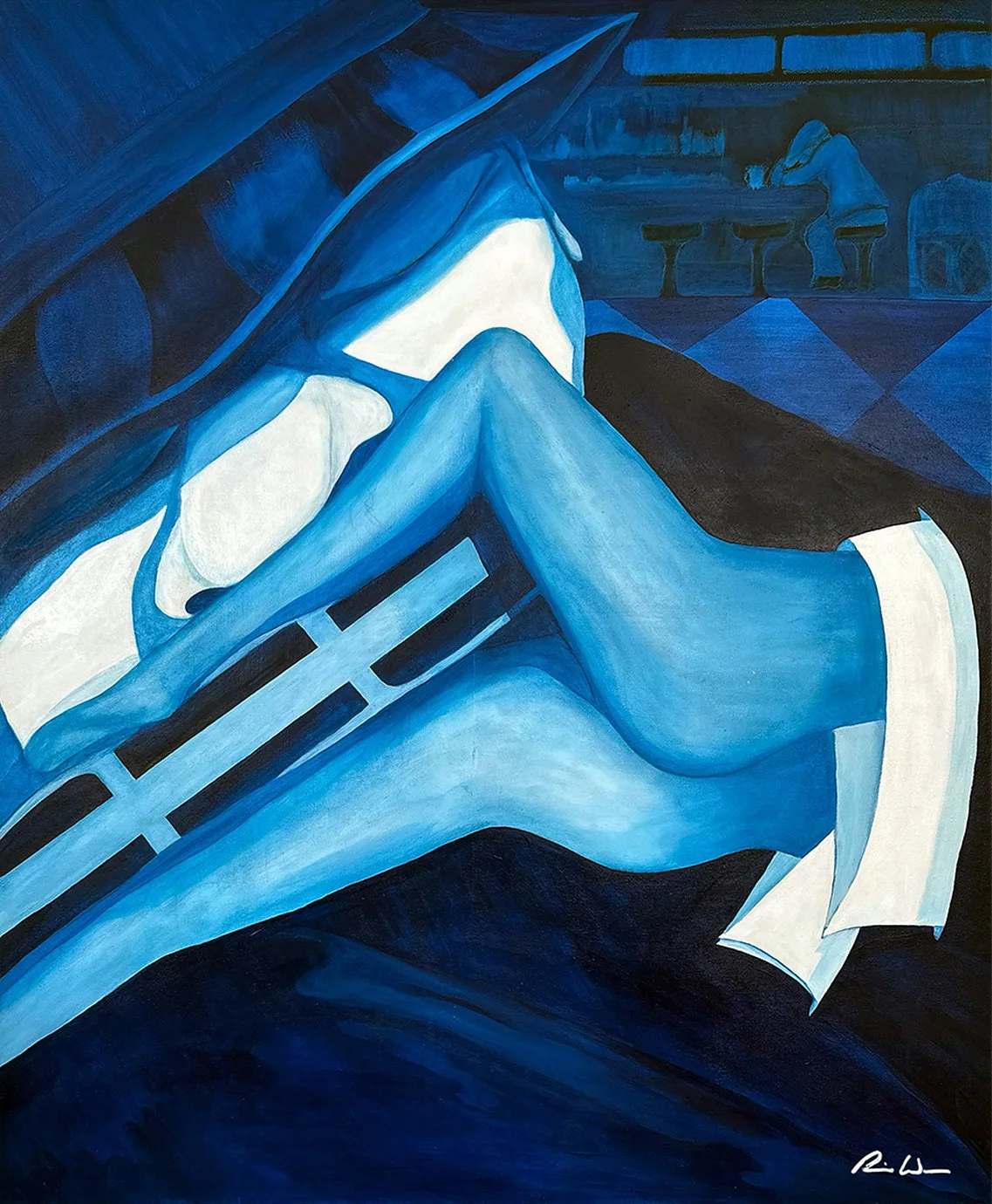
In What Follows, Walsh works in the grammar of aftermath—evidence of something prior, a sediment of consequence. In the extreme foreground, a shadowed figure leans over a harmonica, framed by sweeping, anatomical blue forms that press tightly against the edge of the frame. In the distance, a solitary figure sits hunched at a quiet bar counter. Depth collapses and time thickens in this monochrome blue field, framing the painting not merely as a window, but as an accumulation—each line the residue of a gesture already completed, each surface a quiet record of what has departed.
Original acrylic on canvas 68 in × 54 in × 1.5 in
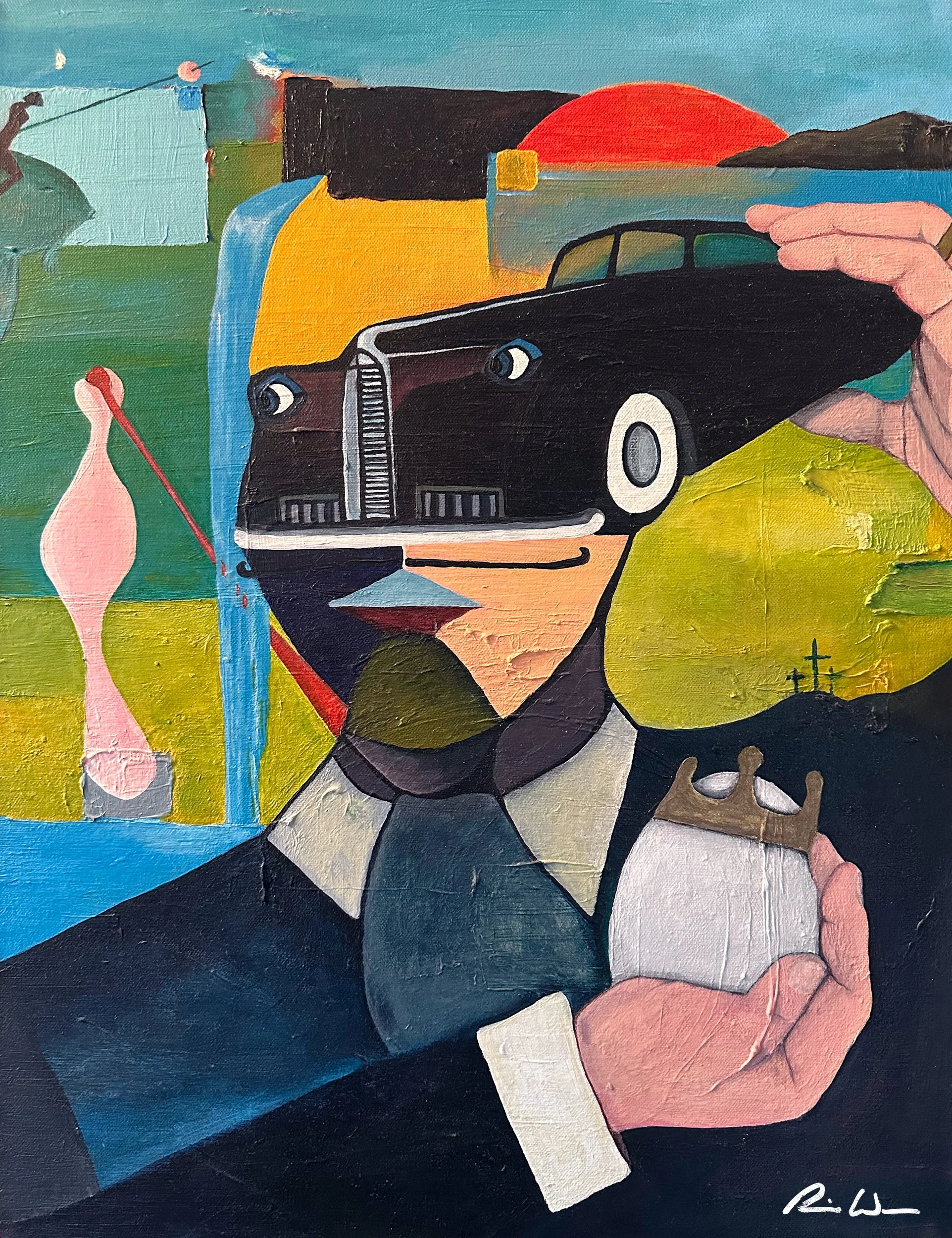
In Kings Road, Walsh constructs a dense surrealist tableau where portraiture merges directly with industrial and landscape geometry. A central suit-and-tie figure holds a crowned egg, while his upper visage is replaced by a sleek, black automobile—its headlights serving as watchful eyes. At the chin, a secondary, Bosch-like hybrid figure emerges, extending a fine staff-like vector to connect with a fluid pink form. Set against a fragmented backdrop of cascading water and a radiant setting sun, the canvas operates as an inquiry into modern mythology, embedding miniature surrealist entities within a monumental architecture of status and identity.
Original acrylic on canvas 18 in × 24 in × 1.5 in
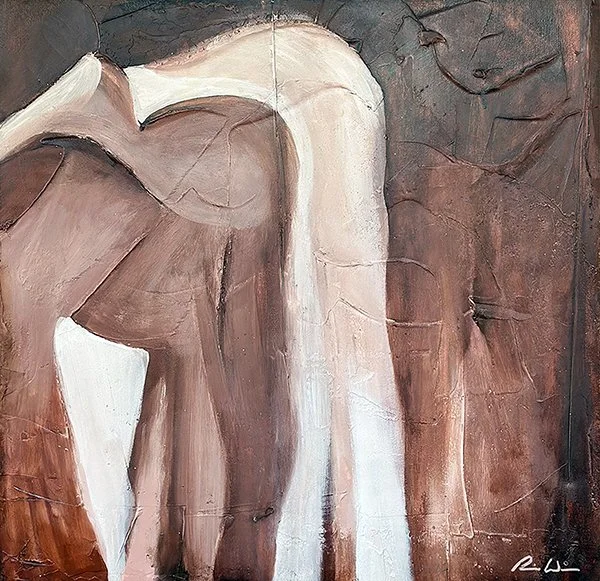
In Rhythm 33, Walsh condenses form into an intimate, highly tactile arrangement of sweeping organic arcs and earthy impasto. A pale, bone-white curve cascades vertically through the composition like a bent spine or draped torso, offset by deep terracottas, warm umbers, and dark slate carved into the canvas. Piercing directly through the surface, two steel guitar strings run vertically across the plane, physically introducing the potential for vibration and sound. The work bridges painting and spatial sculpture, treating the canvas as a physical recording of weight, movement, and structural cadence—a distilled study in tactile rhythm and elemental texture.
Original mixed media acrylic on canvas 20 in × 20 in × 1.5 in
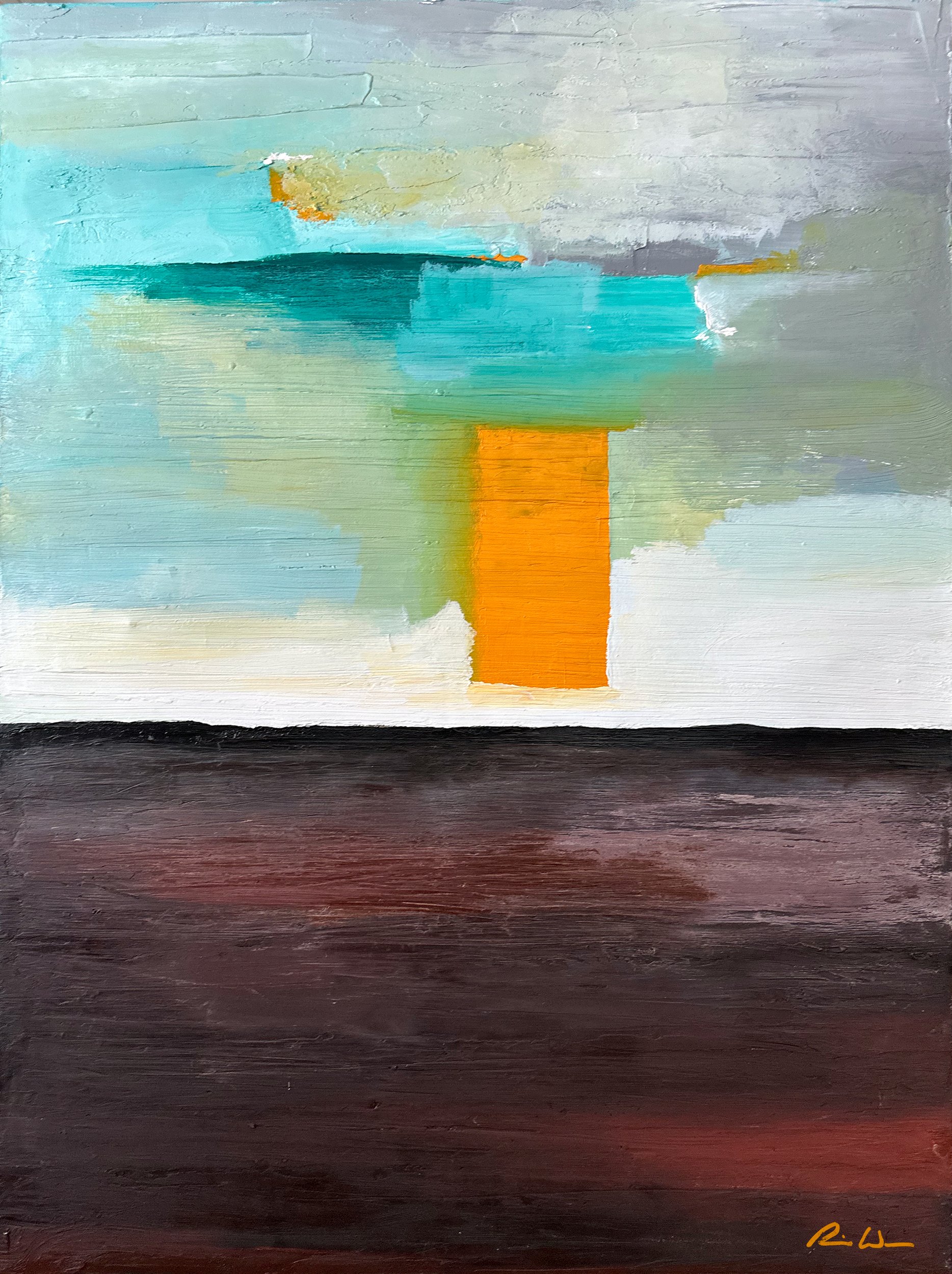
Signal anchors its composition along a heavy horizon of deeply saturated umber, establishing a decisive boundary between terrestrial weight and atmospheric light. Above this dense base, soft bands of slate and muted teal yield to a sharp, vertical pillar—a singular geometric element acting as a focal beacon. Walsh balances raw texture with spatial expanse, framing this isolated stroke not merely as an interruption of the field, but as a quiet, deliberate gesture of connection across vast silence.
Original mixed media acrylic on canvas 30 in × 40 in × 1.5 in
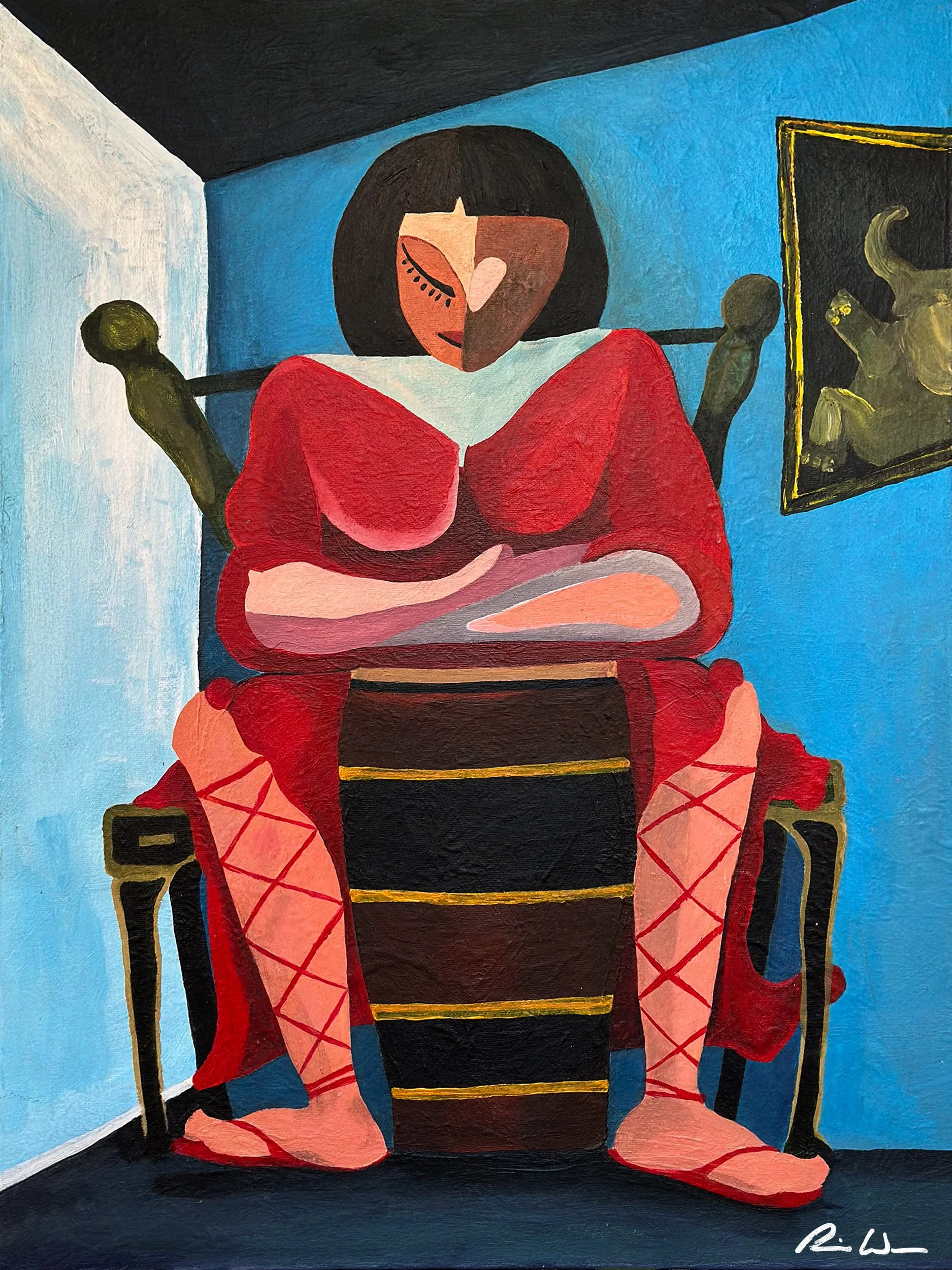
In Rhythm 80, Walsh translates geometric architecture into a powerful, figurative interior. The composition relies on stylized mass and symmetrical staging, centering a seated figure—defined by the sweeping volume of crimson drapery and a grid-patterned, laced leg—straddling a dark, gold-banded drum. This drum serves as both physical anchor and conceptual pulse, with the figure’s split-toned face and closed eyes suggesting a state of profound, inward stillness. The canvas operates as a theatrical stage where the rigidity of form meets the potential for latent sound and memory.
Original painting, acrylic on canvas 18 in × 24 in × 1 in
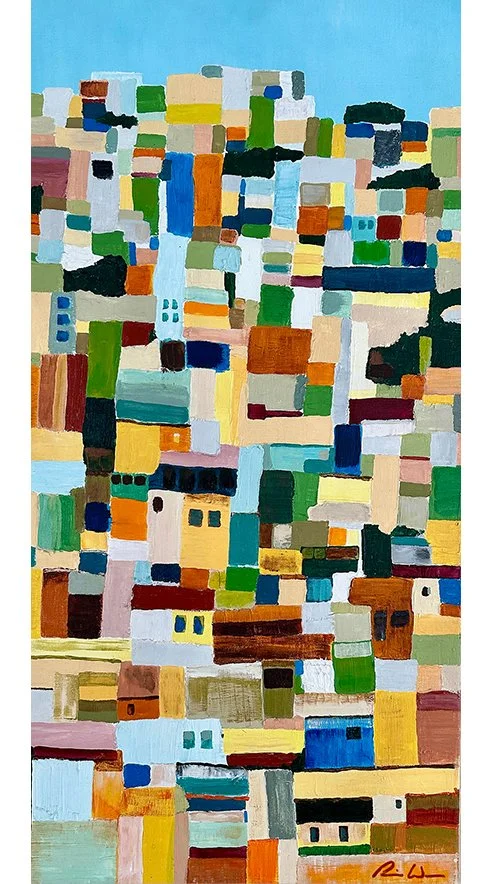
In Rocinha, Walsh builds a dense, vertical mosaic of stacked architectural planes reminiscent of Rio’s hillside community. Vibrant rectangular blocks of ochre, teal, terra-cotta, and pale blue climb upward in tight rhythm, crowned by a clear strip of cerulean sky. The vertical canvas emphasizes scale and density, transforming urban sprawl into a rich tapestry of color, geometric balance, and lived-in structure.
Original acrylic on canvas 18 in × 36 in × 1 in
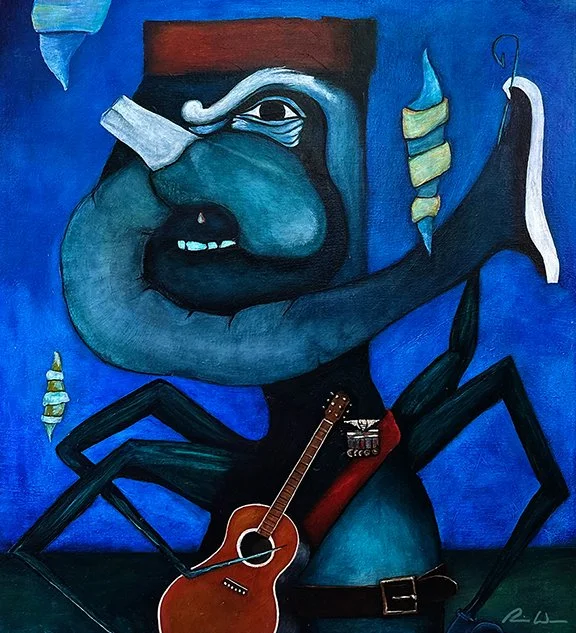
A Crooked Serenade anchors a singular, morphologically complex figure within a brilliant cerulean field. Walsh establishes a compelling tension between fluid, sweeping volumes and rigid linear accents. The facial feature and guarded, solitary eye create an uneasy equilibrium between vulnerability and defense. The canvas functions as an inquiry into performance and resilience, transforming a distorted, solitary form into a resonant monument to endurance.
Original acrylic on canvas 24 in × 26 in × 1 in
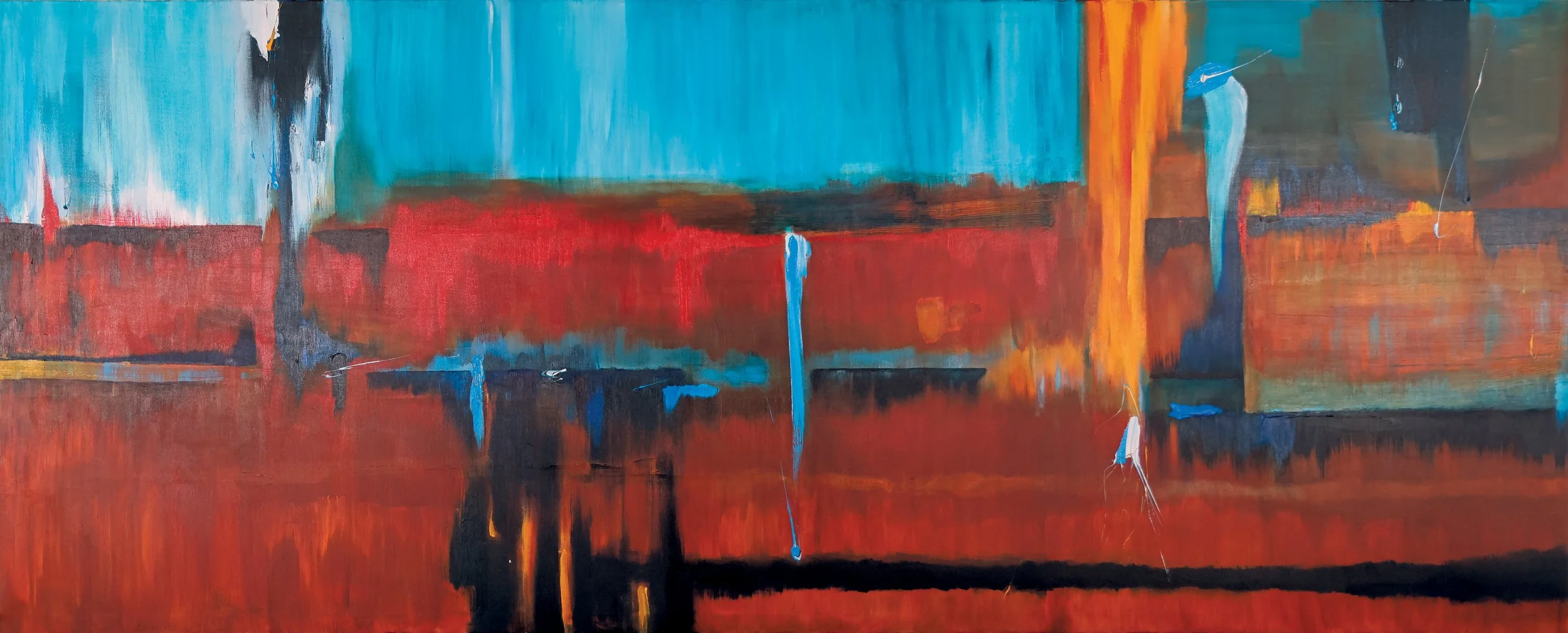
In Helmholtz II, an expansive horizontal field vibrates with intense, layered energy. Walsh sets a scorching band of deep crimson and blazing orange beneath a cool, electric turquoise expanse, bisecting the canvas with raw dark lines and vertical drips that pierce the visual horizon. Referencing concepts of acoustic resonance and thermodynamic equilibrium, the composition captures a state of constant, charged frequency—where contrasting color temperatures press against one another in dynamic balance.
Original acrylic on canvas 95.5 in x 38.5 in x 1.5 in
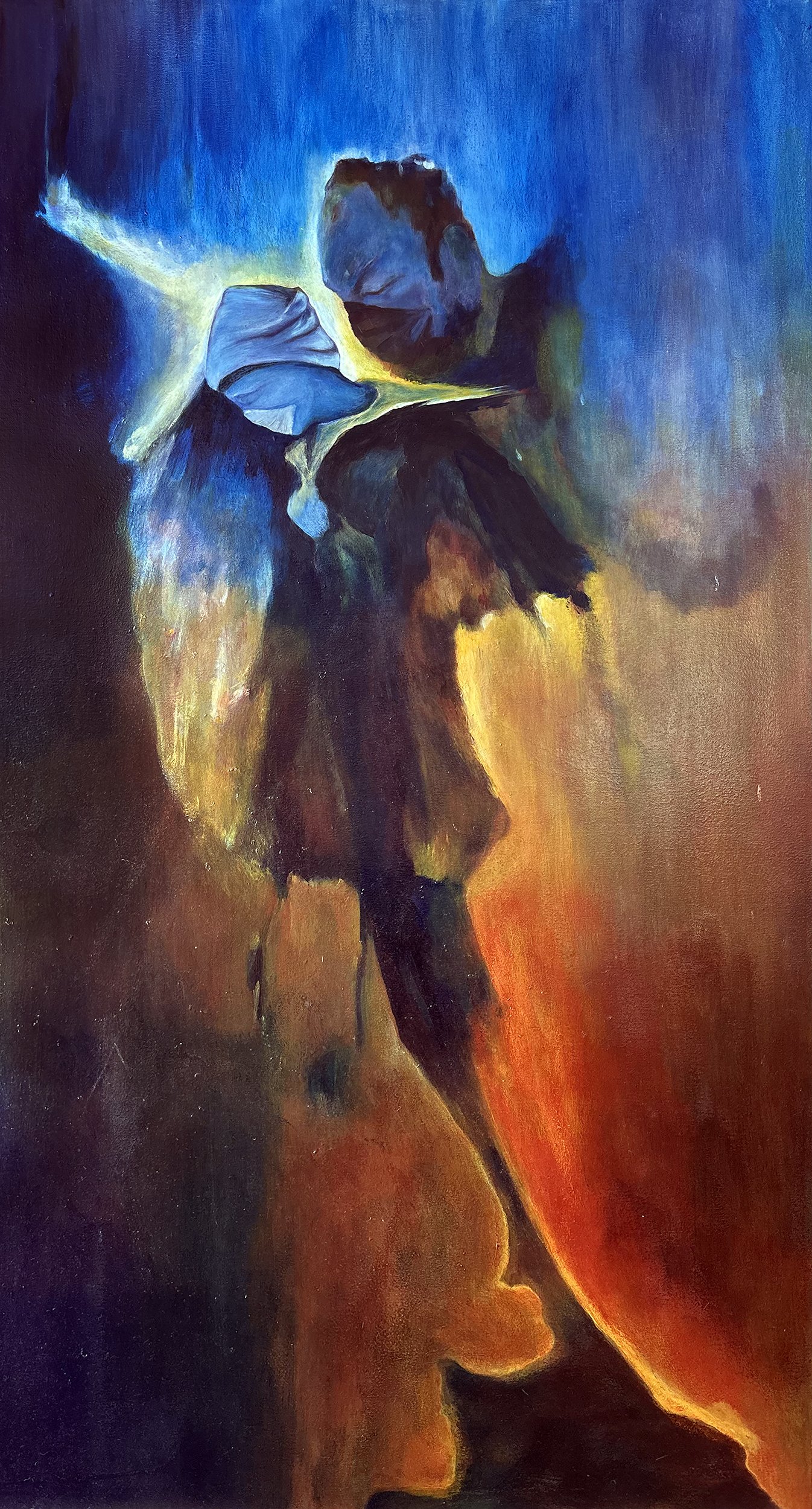
In Pillar of Light, a monumental silhouette emerges from a celestial nexus of vivid lapis blue, warm ochre, and fiery amber. Walsh balances atmospheric, nebular washes against a piercing starburst of electric light that crowns the central form. Vertical, dramatic, and imbued with cosmic scale, the composition operates as an inquiry into transcendence—framing light not merely as illumination, but as a structural column anchoring figure and void.
Original acrylic on canvas 24 in × 48 in × 1 in
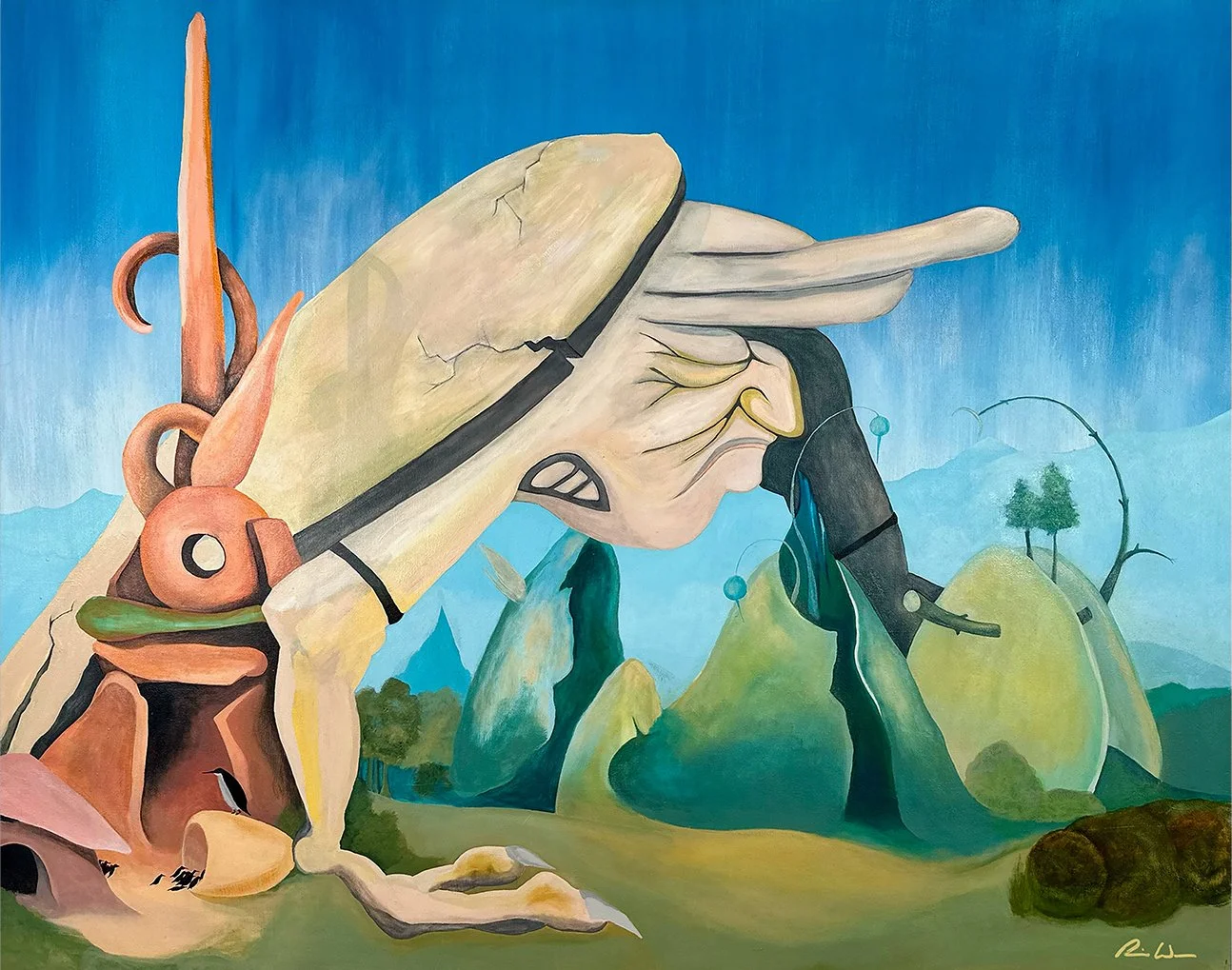
In The Guardian, a colossal, hybrid biological form anchors a surreal, undulating landscape under a luminous blue sky. Walsh combines stone-like textures, organic bone structures, and sharp architectural curves to construct a figure that is simultaneously fragile and monumental. Operating at the scale of myth, the work presents the guardian not merely as a figure, but as an active sentinel holding the boundary between memory, protection, and endurance.
Original acrylic on canvas 68 in × 54 in × 1.5 in
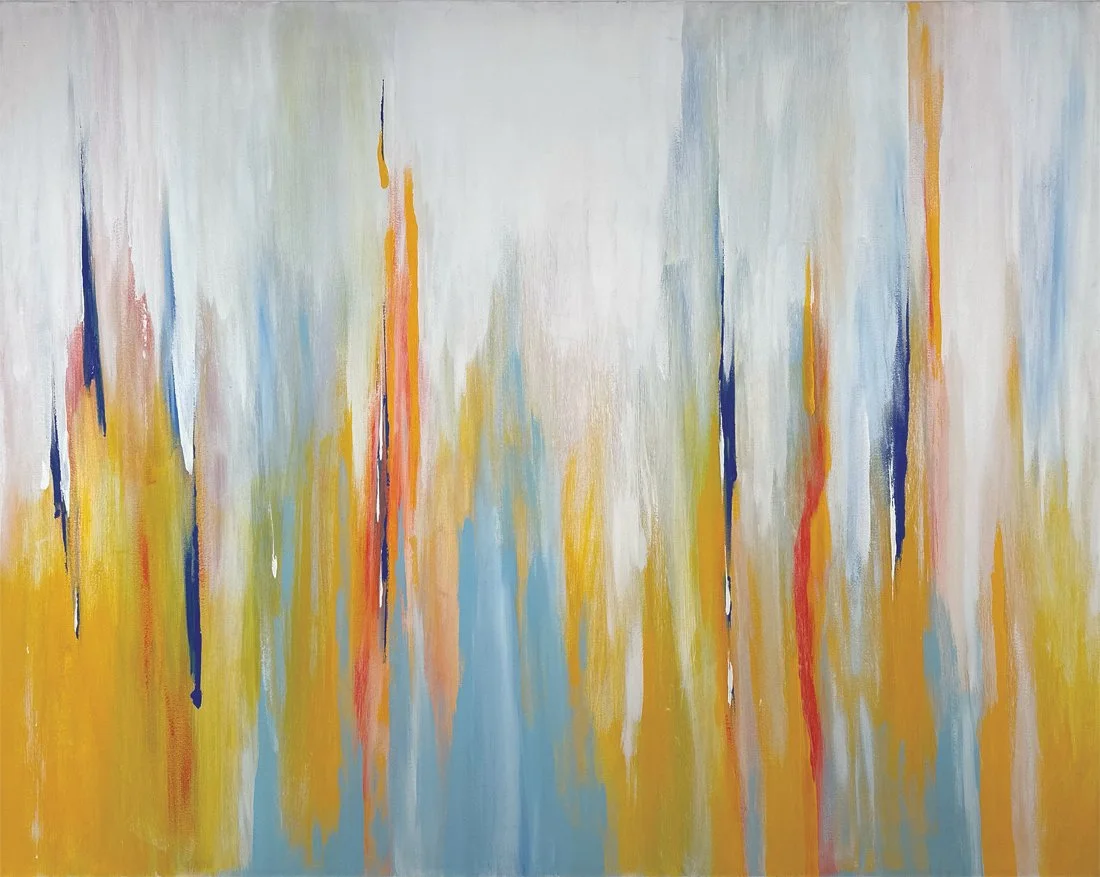
Walsh’s Summer Reign is not an illustration of season, but an environment of ascent—where color is matter and light is velocity. Yellow, blue, and fiery red pigments are less painted than propelled, pulled upward in fluid, decisive strokes. Each band of color operates as a distinct wavelength, each overlap a shared harmonic. The field is not static; it is a field of pure resonance, a tuning fork that the viewer receives and aligns with. This is not a concept for seeing, but the unconditional condition of seeing—to engage with the work is to tune oneself to the frequency of its source.
Original acrylic on canvas 68 in × 54 in × 1.5 in
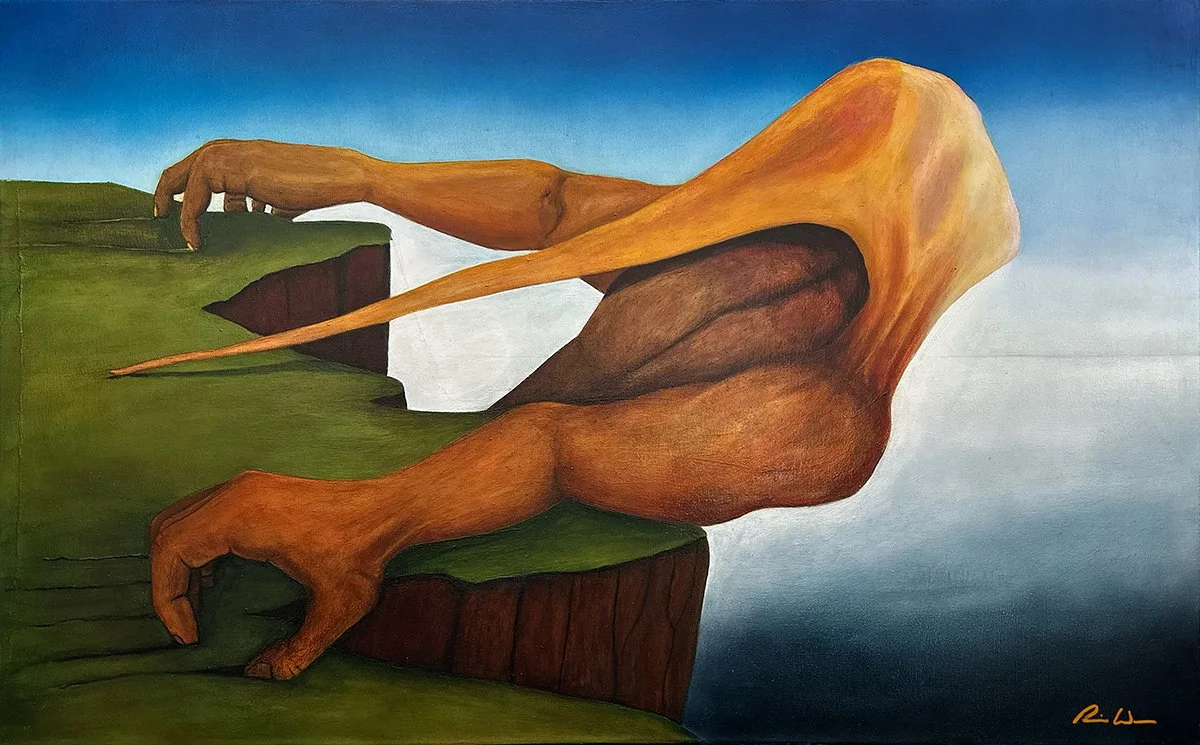
In The Reach, a golden, biomorphic form spans the stark void between two moss-green cliffs. Set against an expansive, misty abyss, the composition relies on extreme physical scale and taut spatial tension — a visceral metaphor for connection and strain, framing human endeavor not as a fluid transition, but as a precarious, grueling effort to bridge an expanse.
Original acrylic on canvas 30 in × 48 in × 1 in
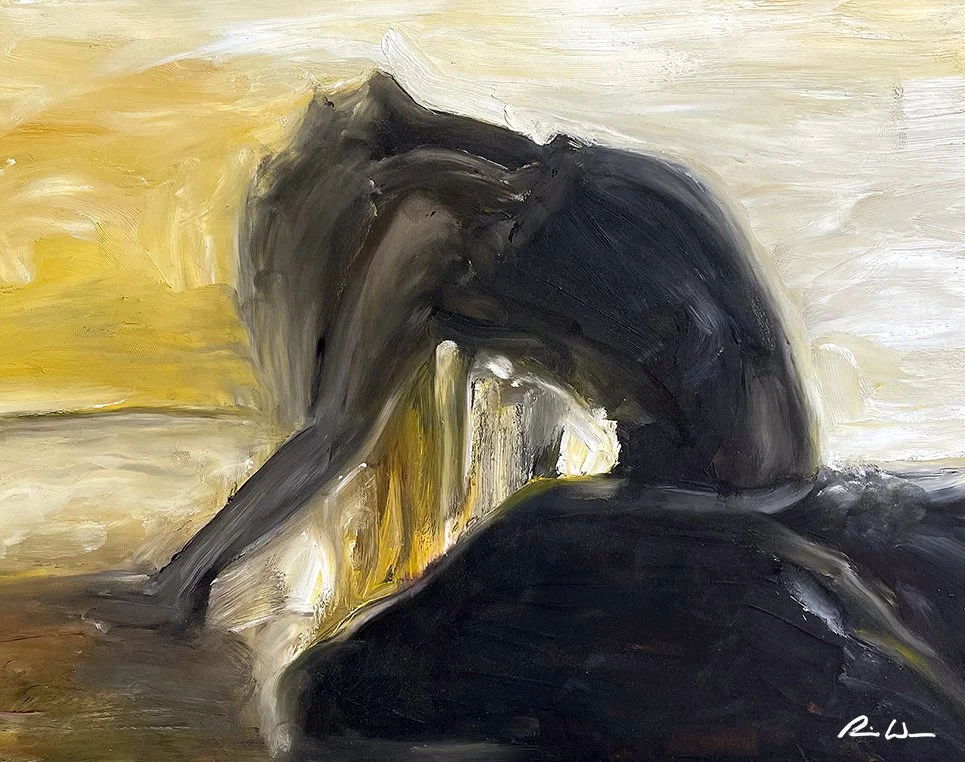
In Valkyrie, thick impasto builds a dark, vaulted figure that arches over a luminous, golden void. Walsh contrasts sweeping charcoals and deep slate against raw, energetic strokes of ochre and bone, giving the intimate panel an explosive physical presence. The composition balances dramatic weight against open light, capturing a powerful gesture suspended in a moment of force and release.
Original oil on panel 12 in × 8 in
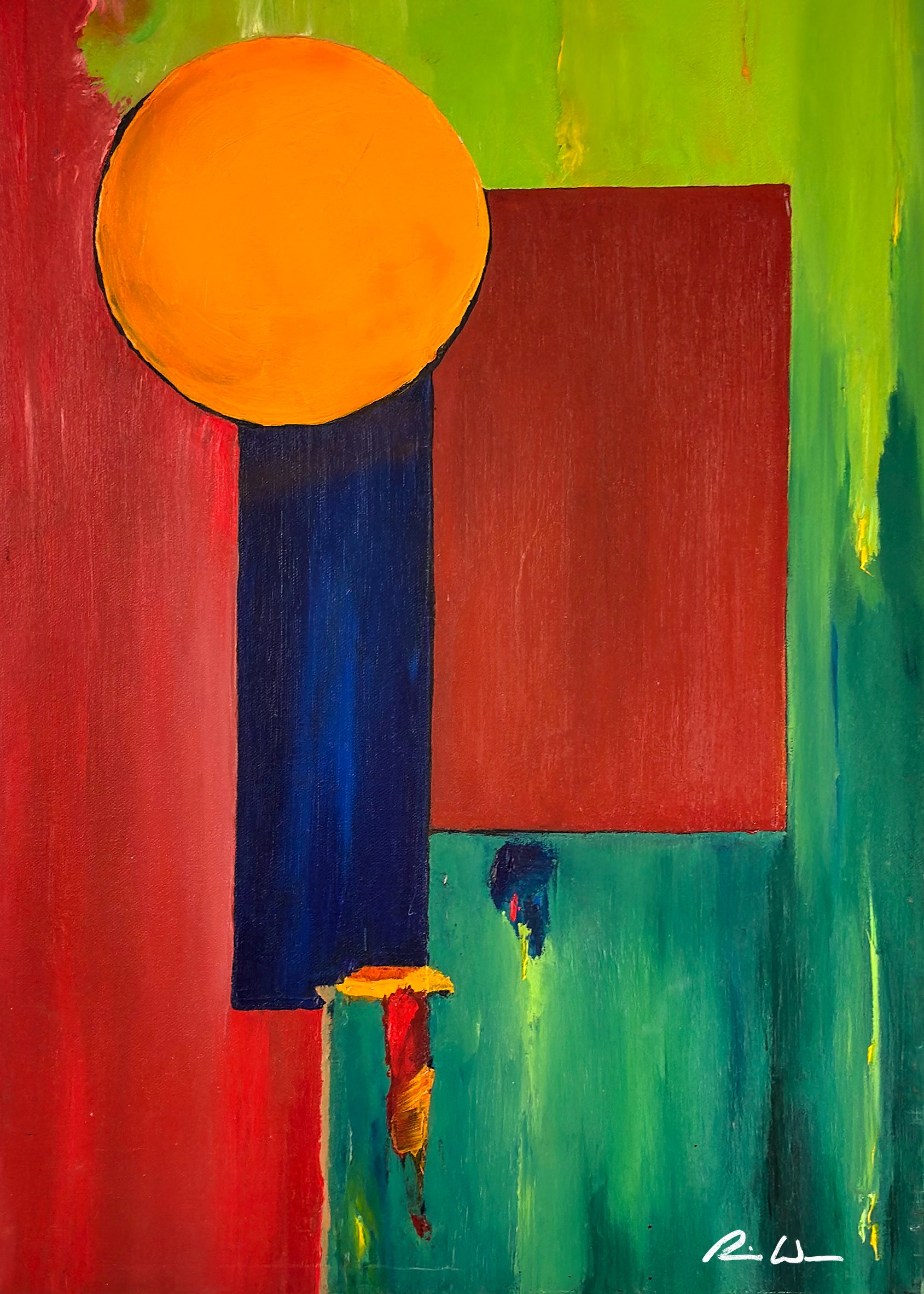
In Solar Anchor, a vibrant golden sphere sits atop a deep blue vertical column, grounding a split field of saturated red and vibrant green. Walsh balances clean, geometric color blocks against gestural, impasto accents below. The composition operates as a study in equilibrium, using a single celestial focal point to stabilize contrasting planes of warmth and depth.
Original acrylic on canvas 15 in × 21 in × 1 in
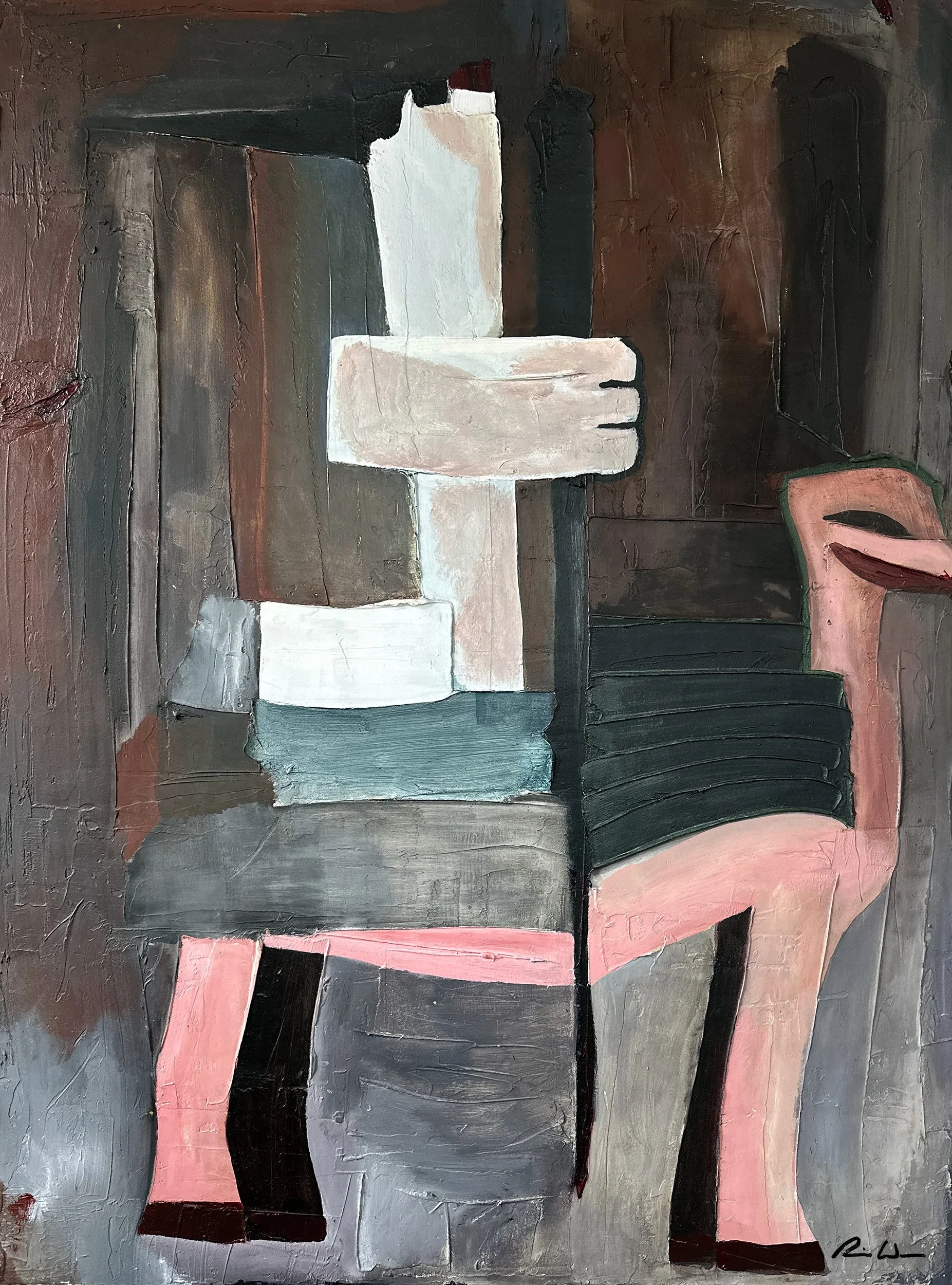
In The Architect, Walsh constructs a brutalist, equestrian tableau reminiscent of a jousting champion after battle. A blocky, plaster-white rider sits atop a four-legged, pink-limbed beast, holding a long, dark staff that pierces the center of the composition. Heavily textured planes of slate gray and charcoal anchor the structure, while a crimson stain at the creature's mouth hints at violence and sacrifice. Walsh frames construction not as peaceful design, but as a monumental, battle-tested force—a physical monument carved directly from impasto, memory, and conquest.
Original mixed media acrylic on canvas 30 in × 40 in × 1.5 in
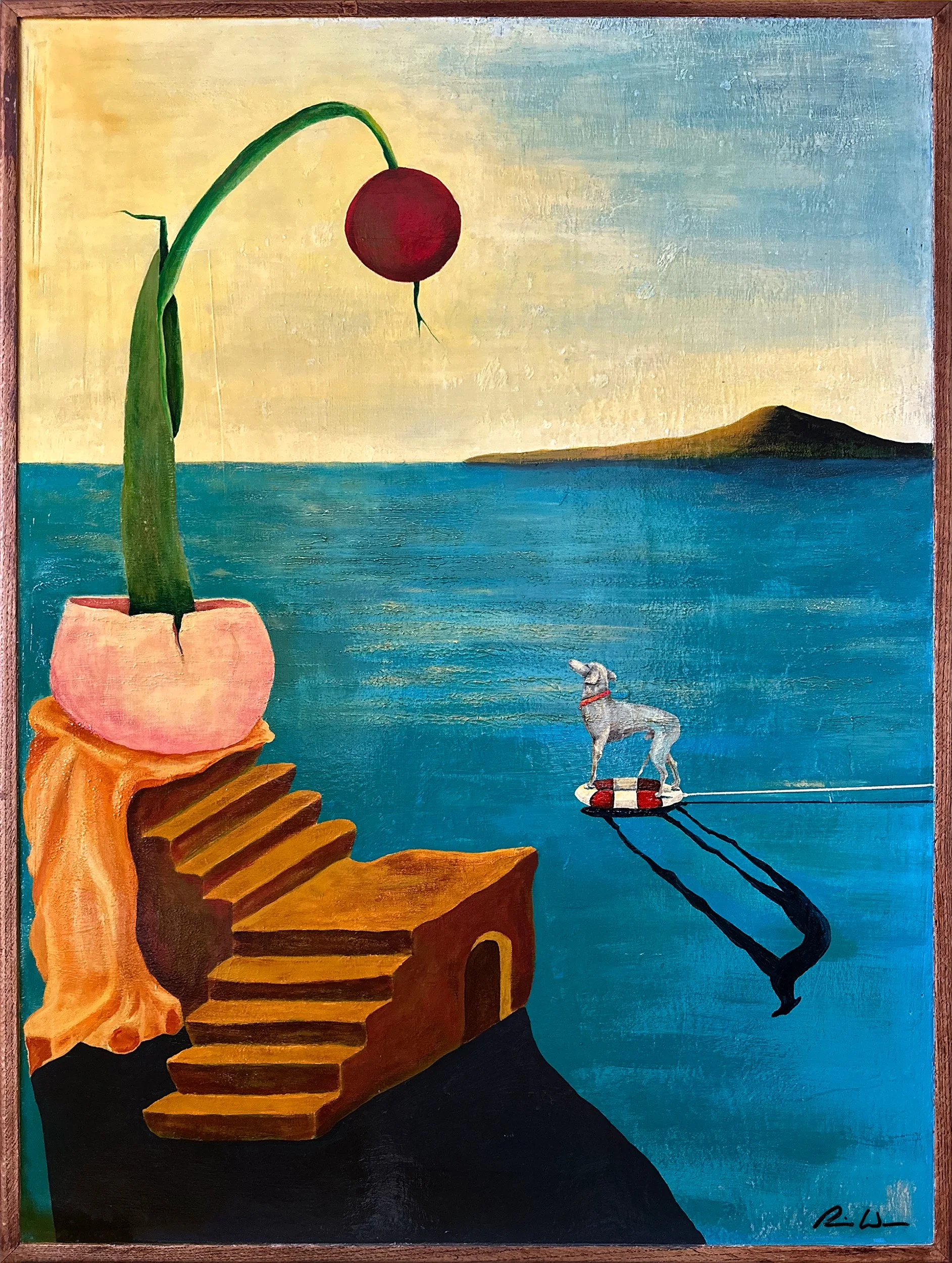
In Forbidden, Walsh constructs a dreamlike coastal landscape anchored by surreal architectural and symbolic staging. To the left, an earthen staircase rises from a dark shadow, supporting a cracked vessel that sprouts a single, drooping stem laden with a heavy crimson sphere. Across a vast, saturated blue sea, a slender greyhound stands atop a buoyant life preserver—its elongated shadow stretching impossibly across the water. The composition balances geometric elevation against planar horizon, framing desire, distance, and isolation not as narrative events, but as a quiet, frozen state of perpetual threshold.
Original acrylic on wood 32.5 in × 42.5 in × 1 in
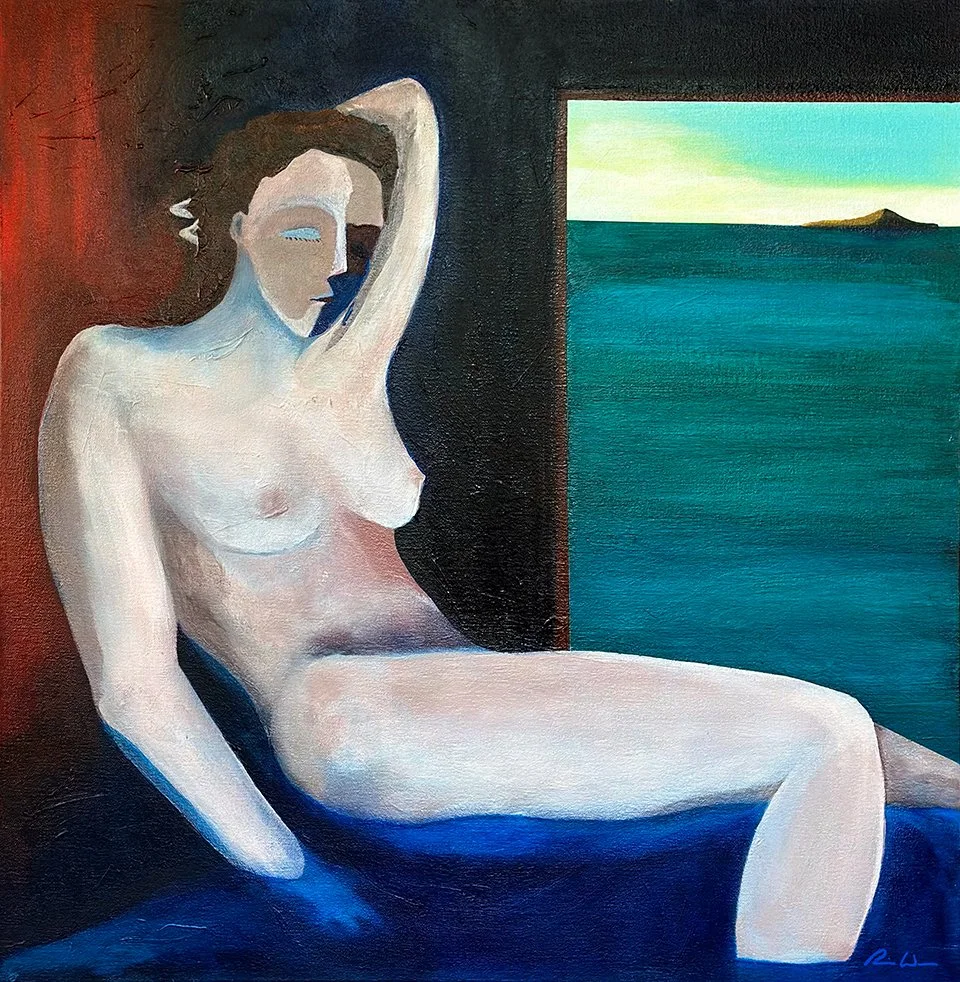
In A Drowning Dream, a luminous reclining figure rests against a dark interior, one arm bent upward in contemplative stillness. Frame-within-a-frame architecture opens to a deep teal sea and distant, solitary landmass—revisiting the evocative coastal motifs established in Forbidden. Walsh contrasts the sculpted, pale flesh of the figure against saturated planes of crimson, navy, and turquoise, framing the composition as an inquiry into longing, memory, and interior solitude.
Original painting acrylic on canvas, 24 in × 24 in × 1.5 in
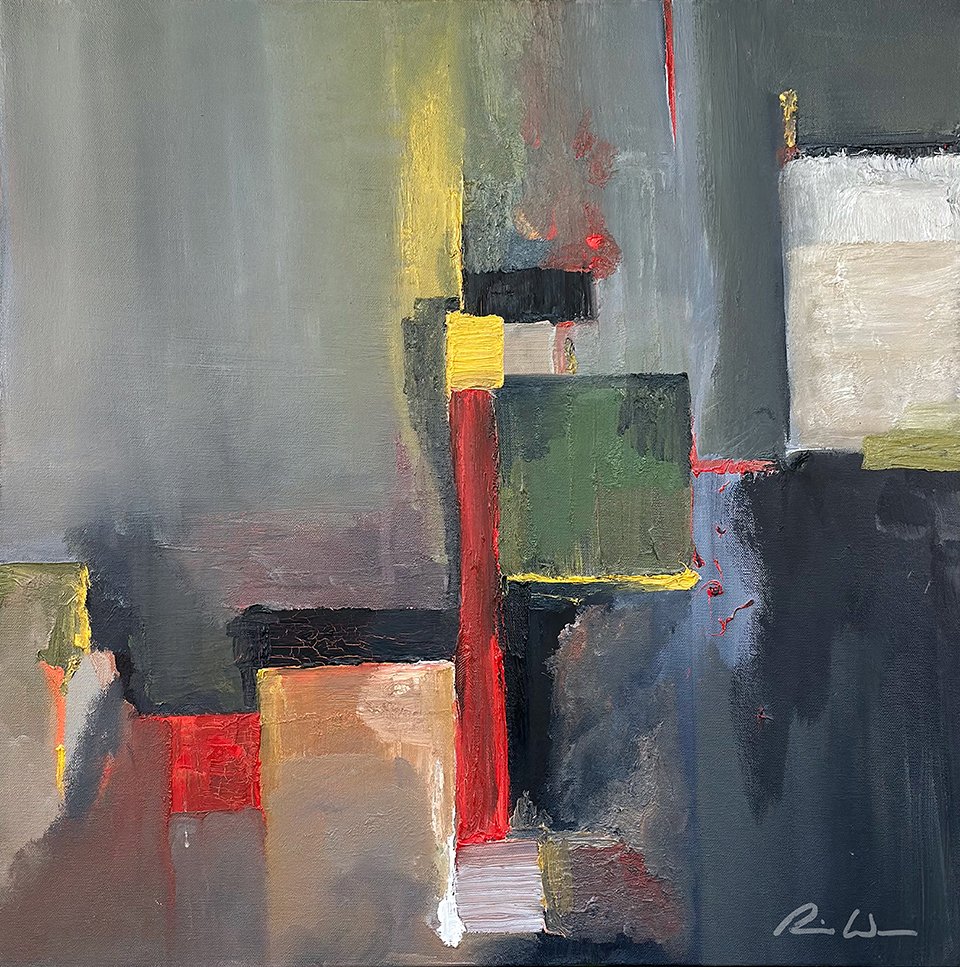
In Grey Matter, Walsh constructs a tight, interior scaffolding within an overarching field of muted charcoal and slate. Interlocking geometric planes—deep forest green, raw sienna, and stark charcoal—are pierced by an upright axis of crimson and primary yellow, creating an architecture that feels both heavily anchored and internal. The square canvas operates as a physical vessel for thought: the surrounding neutral haze acts as a veil, while the sharp, structured center captures the precise, quiet spark of cognition taking form amidst ambiguity.
Original oil on canvas 24 in × 24 in × 1.5 in
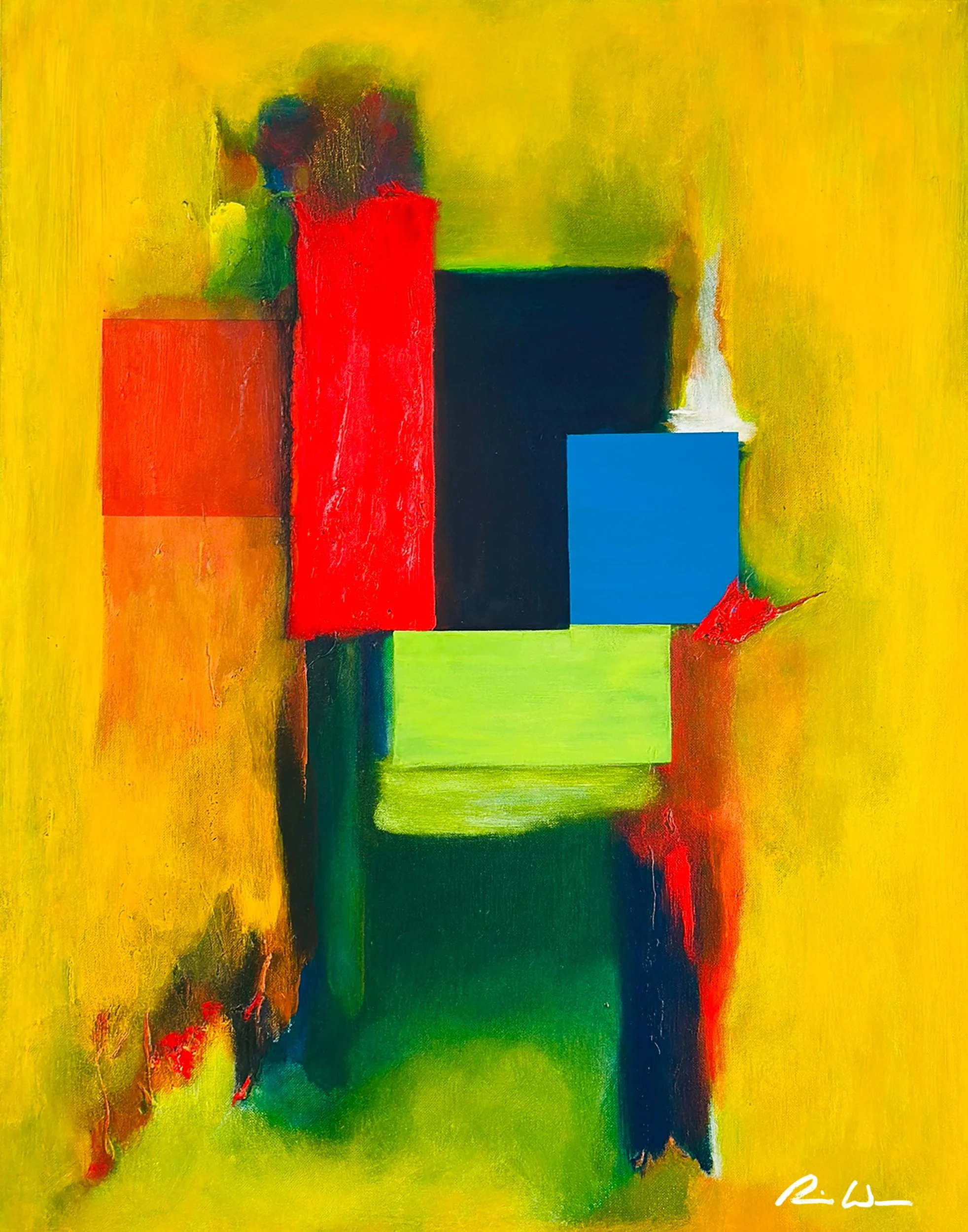
In Revenge of Timing, sharp blocks of saturated color—crimson, cobalt, lime, and navy—interlock and collide against a radiant yellow field. Walsh balances clean, hard-edged geometry against soft, feathered undertones, creating a sharp sense of friction. The composition frames timing not as a passive sequence, but as an active visual force where every form arrives, overlaps, and settles in mid-collision.
Original acrylic on canvas 22 in × 28 in × 1.5 in
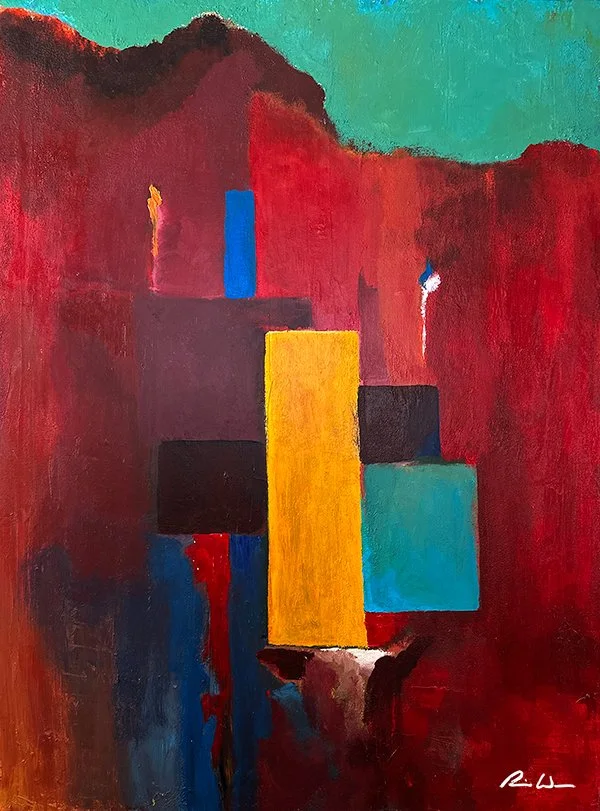
In Summit at Redwood, Walsh constructs a landscape defined not by horizon, but by thermal mass and structural tension. Saturated crimson and deep ochre rise against a sharp turquoise expanse, anchoring a central cluster of geometric forms that act as focal points of gravity. The canvas balances raw, earthen warmth with cool architectural precision—treating elevation as an encounter between natural geology and deliberate human intervention.
Original mixed media acrylic on canvas 32 in × 43 in × 1.75 in